
What distinguishes a complete faucet test from an aerator accessory test? Why does a result recorded at 60 psi still need to be understood alongside the installation arrangement? These questions arose again in a recent customer technical discussion with Jay&Min, highlighting an important issue in aerator selection and certification preparation.
For faucet brands and sourcing teams serving the US market, aerator suitability affects product development, supplier selection and subsequent assembly. Defining the test object and conditions is the first step in interpreting flow data.
Using on-site records with the aerator installed and removed, Jay&Min shares the distinction between assembly and accessory testing and the technical considerations behind an aerator project.
The Flow Measurement May Evaluate Different Products
Testing an aerator installed on a faucet measures the performance of that combination under the stated conditions. The internal waterway, cartridge, connecting hoses and aerator all contribute to the final flow result.
When an aerator accessory is the test object, the focus is the specified accessory’s flow performance under the prescribed test conditions.
Both approaches have practical uses. One evaluates the assembled product; the other supports evaluation and independent certification of the accessory. Understanding the distinction helps brands make sampling, product comparisons and certification discussions more focused.
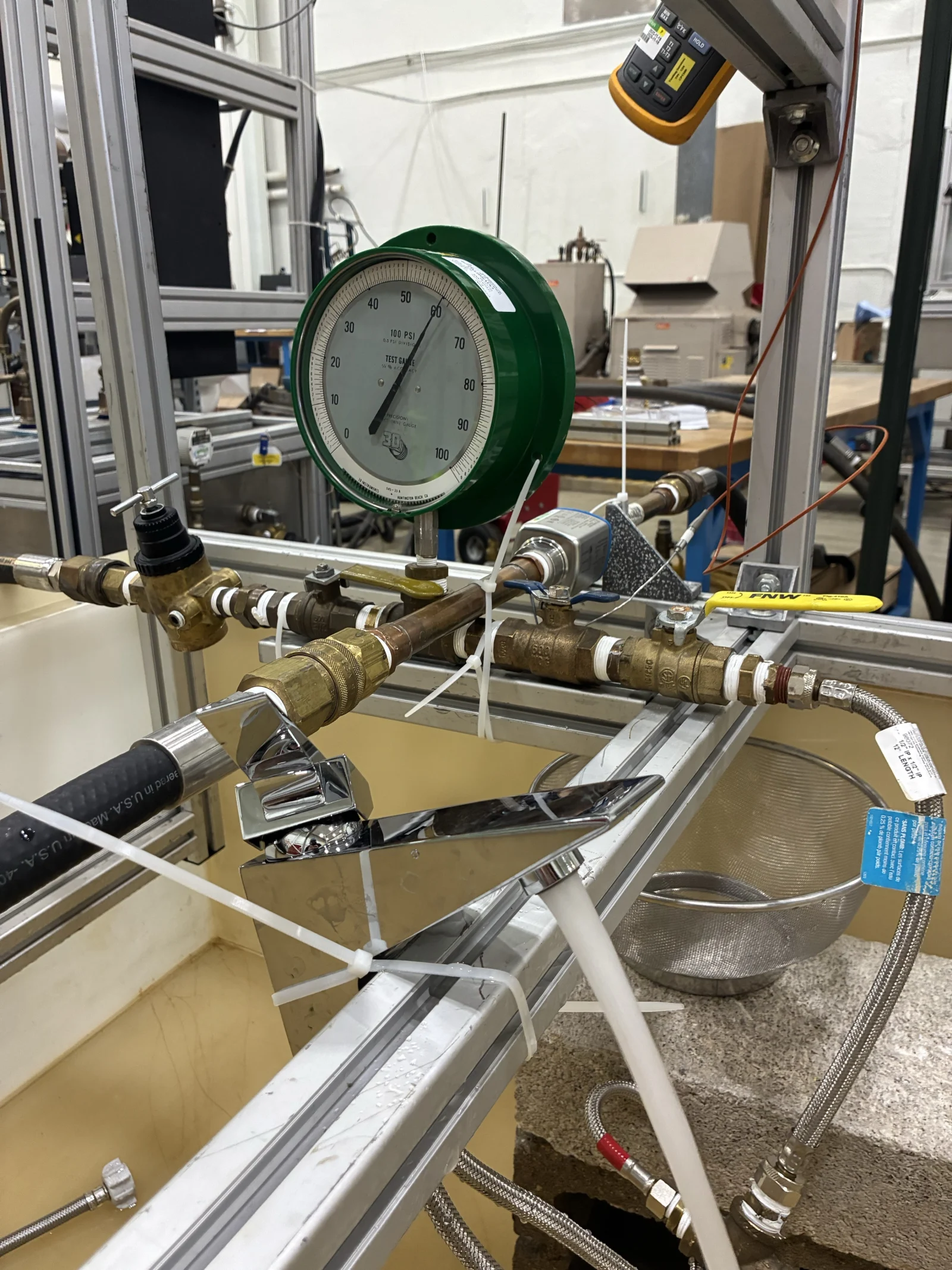
Compare Installed and Removed Conditions to Understand the Waterway
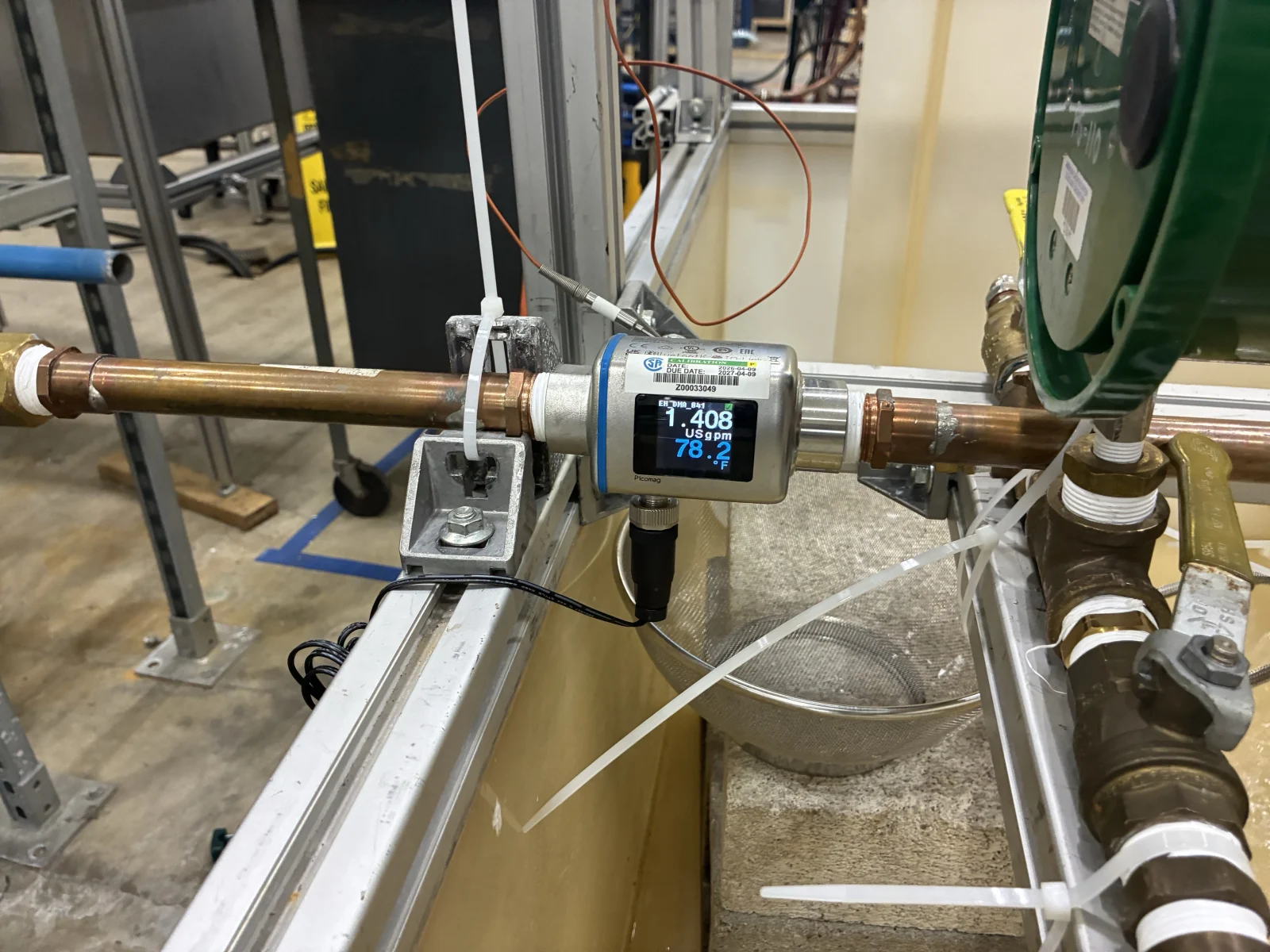
The case includes two on-site records: one shows testing with an aerator installed, and the other records the flow reading after removal. This comparison helps reveal the flow capacity of the faucet and test waterway themselves.
If the upstream waterway already imposes a substantial restriction, the reading with the aerator installed cannot by itself isolate the aerator’s contribution. Conversely, a reading taken without the aerator cannot replace the accessory’s performance result.
Technical analysis therefore considers the installation state, pressure measurement location and flow reading together to understand whether the data describe the complete assembly or can evaluate the intended accessory.
For Jay&Min, technical support includes helping customers understand how a flow number was obtained, as well as supplying the number itself.
60 psi Matters, and So Does Low-Pressure Performance
WaterSense flow evaluation for lavatory faucets and accessories addresses water efficiency and everyday usability. The current final specification includes two key requirements:
At a flowing pressure of 60 psi, the maximum flow must not exceed 1.5 GPM, approximately 5.7 L/min.
At a flowing pressure of 20 psi, the minimum flow must be at least 0.8 GPM, approximately 3.0 L/min.
These are test pressures measured while water is flowing. Flow needs to be limited at higher pressure while retaining adequate delivery for everyday handwashing at lower pressure.
This is why aerator development involves more than pursuing the lowest flow number. Target flow, performance at different pressures, stream form and the user experience all belong in the configuration.
Independent Accessory Certification Supports Clearer Sourcing Decisions
WaterSense certification can apply to eligible lavatory faucets and to eligible faucet accessories such as aerators.
For replacement-accessory sourcing and new product assemblies, an independently certified aerator with supporting documentation helps buyers identify the model, flow version and performance basis for comparison and evaluation.
Jay&Min emphasizes development and testing support for the aerator as a functional component, connecting accessory performance information with customers’ assembly requirements to support selection, sampling and certification preparation.
From Flow Configuration to the Water Stream
An aerator is small, but it directly affects the water users experience. Flow configuration determines water use, aeration construction affects the stream, and the connection and seal determine how the component fits the faucet. Together, these details shape the product experience.
Jay&Min recommends products around target flow, connections and outlet requirements, supporting evaluation with samples and technical information. Construction, identification and packaging options can also be discussed as projects progress from samples to volume supply.
Practical Technical Support for WaterSense Projects
This case highlights an important part of product development: enabling brands, suppliers and testing organizations to discuss a clearly defined test object and test conditions.
For customers preparing a WaterSense project, evaluating aerator suppliers or sourcing replacement accessories, Jay&Min can support test samples, model specifications and dimensional information, available flow-test information, target-flow and connection recommendations, and technical communication about sampling and testing.
From an individual aerator to a complete faucet product, Jay&Min aims to help customers develop water-saving products through clear data, suitable components and practical technical support.